Writing for the Earth (and Yourself)!
Jan 21, 2026
During Mental Wellness Month, we’re reminded that caring for the planet and caring for ourselves often go hand in hand. Many young people are navigating eco-anxiety; the worry, sadness, or stress that come from witnessing environmental change. These feelings are real, and they deserve space.
Writing and poetry can offer that space. Creative writing helps us slow down, reflect, and reconnect with nature and with each other. It allows us to process difficult emotions while also noticing hope and resilience that still exists all around us. When we pay attention to nature, we begin to understand that healing (for ecosystems and for people), takes time, patience, and care.
The poem below, Restoration, explores that connection; showing how both landscapes and individuals can recover, adapt, and grow stronger after challenges.
Restoration
They told us not to bother.
Said it’s easier to start fresh somewhere else.
Said nature doesn’t bounce back like that.
And we thought they were right.
Until the river moved,
and the trees came back,
and we saw what happens
when we stop getting in the way
of the land
and of ourselves.
The river?
It remembered how to move
the second we let it.
We took down a few walls,
and the water ran like it used to.
Fish came back.
Quietly.
Like they were just waiting
for us to try.
And, just like the river,
our mind settles back into motion,
hope and healing find their way through
when we stop damming them out.
The forest too
burned black in places
but somewhere under the ash,
something held on.
Not for us.
But, just because
life doesn’t quit that easily.
Even the soil knows how to heal.
Give it time.
Give it room.
It doesn’t grow on command,
but I promise you, it’s healing.
And we can give ourselves that same patience.
We keep thinking
restoration means
putting everything back exactly how it was.
But maybe
it means learning to live
with the cracks.
To grow something
because of them.
It’s not glamorous.
It’s slow.
It’s planting trees you’ll never sit under.
Pulling weeds that come back anyway.
Checking the stream levels
even when no one’s watching.
And it’s taking small steps for ourselves
even when it feels like nothing is changing.
It’s showing up.
Even when nothing looks different…
Yet.
But then
the frogs return.
The roots hold.
The birds stop just long enough
to remind you:
That the effort is worth it.
For the river,
for the forest,
for you.
It’s never been about going backward.
It’s about choosing to stay and looking forward in a positive way.
Choosing to fix
what we can.
Because not everything needs to be perfect or entirely gone to be worth saving.
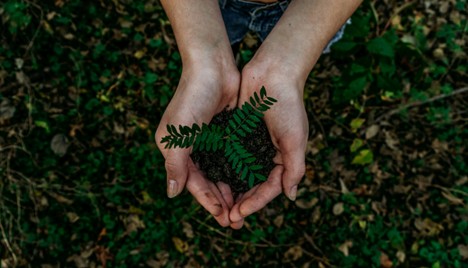
When we care for the environment, we practice many of the same skills that support our mental well-being: patience, empathy, and the courage to keep showing up even when the results aren’t immediate.
When students learn to recognize resilience in the natural world, they often begin to notice it in themselves as well. This poem can be a starting point for conversations about eco-anxiety, climate hopes, and the small actions students can take to feel empowered rather than overwhelmed.
Creative writing is one meaningful way to support that process. It offers students a safe space to explore eco-anxiety, express hope, and reflect on the connections they see between themselves and nature.
To continue this work in your classroom, request a Climate Mindset program; a set of activities designed to help students build emotional resilience, develop constructive climate thinking, and see themselves as part of positive change.
Author: Léane Journault, Programs Coordinator (Francophone), The Gaia Project
Follow us on social for more stories, news and updates:
Facebook: www.facebook.com/gaiaproject
Instagram: @thegaiaproject_
LinkedIn: @thegaiaproject-projetgaia
TikTok: @thegaiaproject_