Notice, Connect, Act: The Power of Spring Outdoors
May 25, 2026
When was the last time you truly noticed spring arriving? This season of change invites us to slow down, step outside, and reconnect with the world around us.
By choosing to step outside, stay observant, and nurture your curiosity, you can deepen your connection with nature. Here’s a simple guide to help you get outside and enjoy its many benefits.
Why spring matters (beyond the weather)
Spring is often described as a “fresh start” and in many ways, it is.
Across our ecosystems, spring is a season of action. Plants grow, animals return, and landscapes that felt still just weeks ago start to shift and come alive. Everything is adapting and moving forward.
When we spend time outside noticing the changes in nature, we start to feel more connected to our environment. Instead of seeing nature as something separate or distant, we begin to understand how closely our lives are tied to these cycles.
That relationship is powerful. Because we are more likely to care when we feel connected, and we are more likely to take action when we care.
The power of getting outside
After months spent mostly indoors, getting outside can feel like a reset.
It can boost your mood, increase your energy, and help you feel more focused. Even a short walk or a few minutes outside can make a difference. However, in addition to the benefits to our well-being, there’s something else happening too.
From reconnection to action
You care more about what you feel connected to. It’s a simple idea, but it’s at the core of climate action. Climate change and environmental issues can sometimes feel overwhelming or far away. But when you’ve spent time in your local environment (when you’ve noticed how it changes, grows, and adapts, it becomes something personal.
Whether it’s reducing waste at school, starting a sustainability initiative, or raising awareness in their community, it often begins with one simple step:
Getting outside and paying attention.
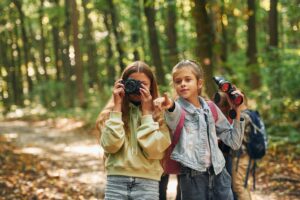
Right outside your door
Here in New Brunswick, spring happens all around us, in the rivers, the forest, and throughout our communities. And the best part? You don’t have to go far to experience it. Environmental action starts in the places you already know, the paths you walk and the parks you pass, and all the spaces you share.
Simple ways to get outside this spring:
Uncertain about how to begin? Start with a small step, all you need is a bit of curiosity and the willingness to step outside. Try one of these:
1. Spend 10 extra minutes outside (that’s it)
No big outing required. Just take 10 minutes to your day, after school, after work, or after dinner. Sit, walk, stretch… anything counts.
2. Take your routine outside
Any kind of task, whether it’s work, eating a meal, scrolling on your phone, or doing a hobby, can be taken outside. What happens when you simply change the setting? Sometimes, connection doesn’t come from doing more, but from doing the same things in a different place.
3. Notice ONE thing
Not everything, just one thing. Maybe it’s birds, maybe puddles, maybe it’s the first sign of green. Focusing on one detail makes it easier to stay present (and surprisingly fun to track).
4. Do a “rainbow walk”
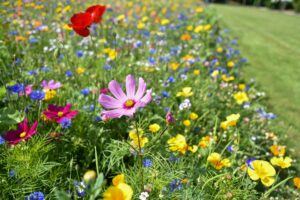
Challenge yourself to find every color of the rainbow on your walk. It might be flowers, signs, clothing, or something unexpected. t’s an easy way to stay engaged and you may begin to perceive your environment differently.
5. Follow the same route more than once
Walk the same path a few times over a couple of weeks. What changes in the landscape? What new growth do you notice? What disappears or transforms? Spring is all about transformation, and this is one of the easiest ways to actually see it happen.
6. Document what you see
Take a photo a day, jot down a few notes, or sketch something that stands out. Reflecting later, you’ll begin to notice the significant transformations over the course of a few weeks.
7. Turn it into a group thing
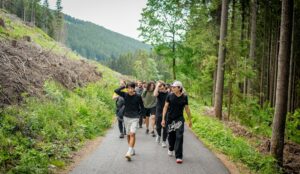
Invite your friends or family! Go for a walk, explore a new trail, or just sit outside together. Engage in physical activities like playing a sport, tossing a frisbee, or organizing a casual game outdoors. The bond with nature and with others deepens more rapidly when experiences are shared.
Connect it to action
Notice something in your environment that could be improved? It might be litter, a lack of green space, or an issue at your school. Use that observation as a starting point for a project or conversation. From these initial discussions, collaborative projects can develop with community members, culminating in meaningful and impactful changes.
If you’re not sure where to begin, start small and build from there. Our website offers a variety of downloadable resources tailored to every school level, making it easy to take that first step.
For elementary students, the K-5 Sustainability Action Projects resource introduces simple, hands-on ways to explore environmental responsibility. For high school students, the Youth Climate Leadership Guide helps turn ideas into concrete, meaningful action and empowers youth to lead change in their communities. And for all grade levels, our 50 Climate Action Posters are a great way to spark inspiration and discover accessible actions you can start right away.
So, this spring, allow curiosity to guide you outdoors, let connection anchor you, and let small actions propel that impact forward.
Author: Léane Journault, Program Coordinator (Francophone), The Gaia Project
Follow us on social for more stories, news and updates:
Facebook: www.facebook.com/gaiaproject
Instagram: @thegaiaproject_
LinkedIn: @thegaiaproject-projetgaia
TikTok: @thegaiaproject_