World Oceans Day: Reflecting on our Relationship with the Ocean
Jun 5, 2026
As World Oceans Day comes upon us, it is a perfect time to reflect on our personal actions and how they affect our oceans. People have different perspectives on the ocean. Some are mesmerised by the sound of the waves crashing onto the coast, viewing the vast amount of blue that just keeps going on infinitely and observing the animals who call the underwater world home.
 Photo taken by Anaïs Pierre-Estimé, Bay of Fundy
Many people are intrigued by the fact that most of the ocean remains unexplored and mapped, with only 20% to 30% charted. This can leave you to wonder what is going on deep down in the ocean; it piques curiosity. The ocean holds countless remarkable wonders that are often taken for granted. For instance, New Brunswick and Nova Scotia are homes to the Bay of Fundy, which has the world’s highest tides. The latter can rise to 16 metres (52.5 ft), with 160 billion tonnes of water moving in and out of the bay TWICE a day! It is also the home to a huge variety of marine animals, like ocean sunfish, basking sharks, leatherback turtles, harbour porpoises, harbour seals and a variety of whales.
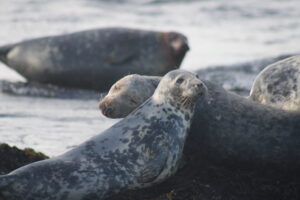 Photo taken by Anaïs Pierre-Estimé, Bay of Fundy
The diverse marine life contributes to the varying landscapes and characteristics of the ocean. It can be rocky, muddy, have white sand and clear waters, or have dark waters due to the clay on the ocean floor. There is so much to discover and learn because of such varieties.
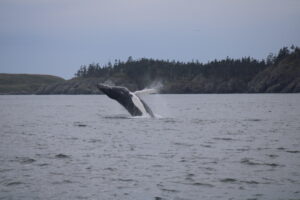 Photo taken by Anaïs Pierre-Estimé, Bay of Fundy
However, we should also acknowledge how the ocean can be a source of fear. While the crash of waves can evoke feelings of power and awe, it can also be viewed as anger and frustration. The vastness of the sea can make one feel isolated and out of control. Individuals’ personal encounters shape their connections with the ocean and water. For instance, some cultures can have a history of trauma with the lack of access to water or not having control of their bodily autonomy when navigating the ocean.
World Oceans Day is a great opportunity to consider how each of our individual choices impact the seas. They cover around 70% of our planet Earth – more than the land we live on! It helps regulate global temperatures, protecting us from extreme heat and keeping the Earth cool. Your impact on the ocean is so important, as all oceans are connected. For instance, bottles made in the Maritimes were found on the beaches of Scotland. Conscious consideration of your influence on water bodies can lead to significant positive changes.
Here are ways you can improve your connection to the ocean:
- Act by supporting ocean conservation organisations locally or online.
- Discover more about Canada’s marine protected areas.
- Keep yourself updated on the current events in our marine environments and the effects of climate change on them.
You can also check out the National Oceanic and Atmospheric Administration‘s resources for more information.
Feeling the pressure to take all these steps to make a difference can be daunting. Remember, do what you can. Every effort counts towards creating a healthier planet for future generations.
Author: Anaïs Pierre-Estimé, Program Coordinator (Francophone), The Gaia Project
Follow us on social for more stories, news and updates:
Facebook: www.facebook.com/gaiaproject
Instagram: @thegaiaproject_
LinkedIn: @thegaiaproject-projetgaia
TikTok: @thegaiaproject_